

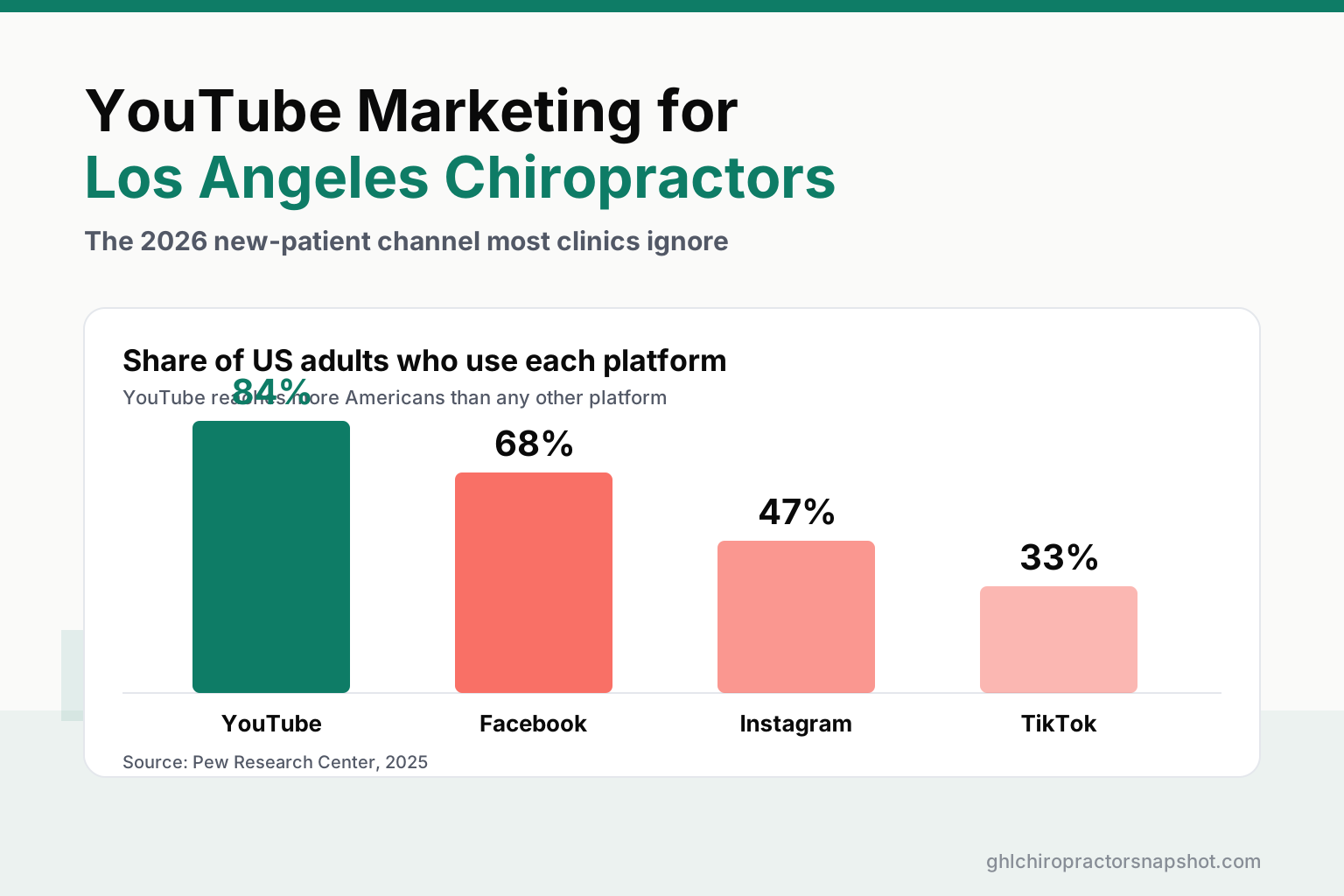
Should a Los Angeles chiropractor use YouTube to get new patients? Yes — because YouTube reaches more American adults than any other platform, doubles as the internet’s second-largest search engine, and rewards exactly the kind of short educational video a chiropractor is already qualified to make. A Silverlake desk worker with a stiff neck who types “why does my neck hurt at my desk” into YouTube at 10 PM will watch whoever shows up first. If that’s your 60-second clip, you’ve just introduced your clinic to a future patient for the cost of a phone and a tripod. 84% of US adults use YouTube — more than Facebook (68%) or Instagram (47%) (Pew Research Center, 2025), and in a market as saturated and search-savvy as Los Angeles, it is the discovery channel most clinics leave completely empty.
This is a practical, sourced guide for LA clinic owners — and the agencies that run their marketing — on why YouTube works for chiropractic, what to film, and how to turn a video view into a booked exam. Every statistic below is dated and linked to its source.
Table of contents
- The short answer: why YouTube fits chiropractic
- Why YouTube out-reaches every other platform
- Why this matters more in Los Angeles
- How a YouTube video becomes a booked LA patient
- What LA chiropractors should actually film
- Long-form vs. Shorts: use both
- Turning views into booked exams
- DIY vs. done-for-you
- Staying compliant: HIPAA and medical claims
- Frequently asked questions
The short answer: why YouTube fits chiropractic
Most chiropractors already do the hard part of YouTube every single day — they explain the body to nervous people. “Why does your lower back seize up when you sneeze?” “Is it safe to crack your own neck?” “What actually happens in a first adjustment?” Those are the exact questions Angelenos type into YouTube, and a clinician answering them on camera is more credible than any ad you could buy.
YouTube rewards that. Unlike a feed that shows your post to today’s followers and forgets it, a YouTube video is an asset that keeps getting recommended and keeps showing up in search for months or years. It is the only major platform that behaves like a library and a TV network at the same time — searchable like Google, and endlessly recommended like a social feed.
For a local service business, the math is simple: you don’t need a million views. You need the right few thousand — people who live and work within driving distance of your clinic — to watch your face, trust your expertise, and tap through to book. YouTube is the most efficient place to manufacture that first impression at scale, because that’s where the audience already is.
Why YouTube out-reaches every other platform
The reach gap is not subtle. Pew Research Center found that 84% of US adults use YouTube — the single most widely used online platform in America, ahead of Facebook at 68%, Instagram at 47%, and TikTok at 33% (Pew Research Center, 2025).
Reach is only half the story. YouTube is also the second most-visited website in the world, trailing only Google, with over 2.5 billion monthly logged-in users (Statista, 2025). People don’t just scroll it — they search it, the way they search Google, and a huge share of those searches are “how do I…” and “why does my… hurt” questions. That is native territory for a chiropractor.
And the numbers show video changes minds. In Wyzowl’s 2025 survey, 89% of people said watching a video convinced them to buy a product or service, and 96% said they’d watched an explainer video to learn about one (Wyzowl, 2025). For a clinic, “buying” is booking a first exam — and a prospective patient who has watched you calmly explain their problem has already met their future chiropractor before they ever call.
Why this matters more in Los Angeles
Los Angeles is one of the most competitive — and most digitally native — chiropractic markets in the country. There are thousands of licensed chiropractors across LA County, and a would-be patient in Pasadena or Culver City has a dozen clinics within a short drive. In that environment, being findable and trustworthy on video is a real differentiator, because so few of your local competitors are doing it well.
Angelenos also search locally with high intent. 76% of people who perform a “near me” search on their phone visit a related business within a day, and local searches convert to action faster than almost any other query type (Think with Google). Google increasingly blends video into those results, and YouTube clips can surface directly inside your Google Business Profile — so a well-made “first visit at our Los Angeles clinic” video does double duty: it builds trust on YouTube and strengthens the local search listing that drives most of your calls. (For the search side of that equation, see our guide to local SEO for chiropractors and how AI search engines choose which clinic to recommend.)
How a YouTube video becomes a booked LA patient
The path from “video view” to “new patient on the table” is short and repeatable when the pieces connect. It looks like this:
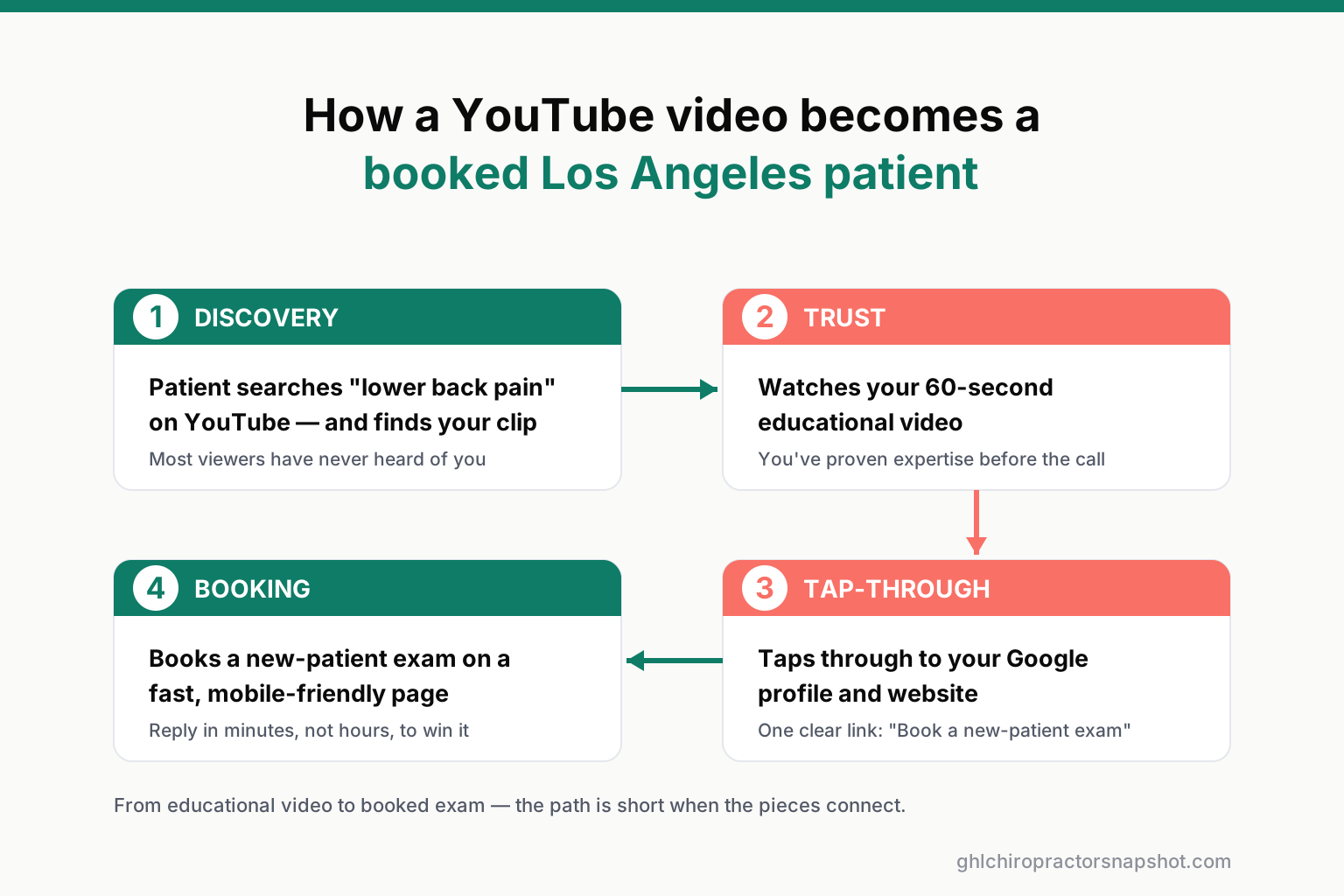
- Discovery. Someone in LA searches a symptom or watches a recommended Short and lands on your video. Most of this audience has never heard of your clinic.
- Trust. In 60 seconds you answer their question clearly and without hype. You’ve now demonstrated expertise — the single most persuasive thing a healthcare buyer can experience before booking.
- The tap-through. Your video description, pinned comment, and channel banner all point to one place: a booking link. Your Google Business Profile, freshened with video, reinforces it.
- The booking. They land on a fast, mobile-friendly page and book — or they message you, and you reply within minutes instead of hours.
The weak link is almost never the video — it’s steps 3 and 4. Clinics film a great clip and then send viewers to a slow website with no obvious “Book now,” or a form nobody answers until tomorrow. Speed and a clean path to the calendar are what convert attention into revenue.
What LA chiropractors should actually film
You do not need a studio. You need to answer real questions on camera, consistently. High-performing chiropractic video ideas that work in a market like Los Angeles:
- Symptom explainers. “Why your lower back hurts after a long drive on the 405.” Local, relatable, searchable.
- Myth-busting. “Is it bad to crack your own neck?” These get watched because everyone’s wondered.
- First-visit walkthroughs. Show the office, the intake, what an adjustment feels like. This removes the fear that stops first-time patients from booking.
- Desk-and-posture tips. LA’s studios, agencies, and tech offices are full of desk workers with the exact complaints you treat. Speak to them.
- Quick mobility drills. 30–60 second Shorts of a stretch or exercise are endlessly shareable and rank for “how to” queries.
- Patient-story style education (no PHI, illustrative or with explicit consent) about a common problem and the path back to normal.
The unifying rule: teach, don’t pitch. The booking comes from trust, and trust comes from being genuinely useful for free.
Long-form vs. Shorts: use both
YouTube now has two distinct discovery engines, and a smart clinic feeds both.
Shorts are the growth rocket. YouTube Shorts now averages about 200 billion daily views, up from roughly 30 billion in 2022 and 70 billion in late 2023 (The Wrap / YouTube CEO Neal Mohan, 2025). A vertical 30–60 second clip of one tip is the cheapest way to reach strangers who don’t follow you yet — the same discovery advantage that makes Instagram Reels so effective for clinics.
Long-form videos (3–8 minutes) are the trust-and-search engine. They rank for detailed queries, keep people watching longer, and give you something substantial to link from your website and Google profile. A good rhythm for a busy clinic: publish a few Shorts a week for reach, and one longer explainer every week or two for depth — and repurpose one long video into three or four Shorts so a single filming session feeds both.
Turning views into booked exams
Reach that doesn’t convert is a vanity metric. Three things turn LA viewers into patients:
- One obvious next step. Every video description, pinned comment, and your channel banner should point to a single booking link — not your homepage, not a link tree with ten options. Make “book a new-patient exam” the only real call to action.
- A fast path to the calendar. The booking page must load quickly on a phone and let someone self-schedule in a couple of taps. If your site is slow or booking means “call during business hours,” you’ll lose the viewer you just earned. (See why website speed decides bookings and how online scheduling lifts conversion.)
- Fast replies. Comments and DMs are leads. A viewer who asks “do you take my insurance?” and hears back in minutes books; one who waits until tomorrow has already scrolled on. Speed-to-lead is the difference, and it’s the same discipline behind missed-call text-back.
Layer reviews on top and the flywheel spins: a video builds trust, the patient books, a happy patient leaves a review, and more reviews lift your local ranking so the next searcher finds you faster.
DIY vs. done-for-you
Here’s the honest tension. YouTube’s payoff is real, but it is a consistency game — and consistency is exactly what a full clinic schedule destroys. Filming ideas, editing clips, writing keyword-aware titles and descriptions, designing thumbnails, publishing on a calendar, cutting long videos into Shorts, and replying to every comment fast enough to book is genuinely a part-time job. Most owners start strong, post four videos, get busy, and quietly stop — which is worse than never starting, because the channel looks abandoned.
That’s the gap our done-for-you social media service fills. We run the whole engine — YouTube, Shorts, and the other channels — so your clinic publishes consistently without you touching an editing timeline: we script from your expertise, edit and caption, publish on a schedule, and wire every video to a booking link, starting at $397/month. If you’d rather keep a person in-house who lives in your GoHighLevel account and runs the posting, replies, and follow-up for you, a dedicated GHL virtual assistant is the other path. Either way, the point is the same: the channel only pays off if it actually keeps running.
Staying compliant: HIPAA and medical claims
Video is patient-facing, so keep it clean:
- No PHI. Never show or name a real patient, their chart, or identifiable details without explicit, written consent. “Patient story” content should be illustrative or consented — not a peek at someone’s file.
- Educate, don’t diagnose. Speak in general terms about common conditions. Don’t promise cures or specific outcomes; keep claims within what you can defend and within state advertising rules for chiropractors.
- Comments are public. Answer clinical questions generally and move anything specific to a private, secure channel — never discuss an individual’s condition in a public comment thread.
Done this way, YouTube is one of the safest marketing channels a clinic has: you’re simply teaching, in public, the things you already tell patients every day.
The bottom line
YouTube is the widest-reach platform in America, the second-biggest website on the internet, and the one place where a chiropractor’s core skill — explaining the body clearly — is also the marketing. For a competitive, search-driven market like Los Angeles, that combination is rare and valuable. The clinics that win won’t be the ones with the best cameras; they’ll be the ones that show up every week and make it effortless to book. The only real question is whether you run that engine yourself or hand it to a team that keeps it running.
Frequently asked questions
YouTube for LA chiropractors — FAQ
Is YouTube really worth it for a single-location LA chiropractor?
Yes. Because 84% of US adults use YouTube (Pew, 2025) and it doubles as the internet's second-largest search engine, even a small local channel can reach the exact Angelenos searching their symptoms. You don't need viral numbers — you need the right few thousand local viewers who then book.
How many videos should a chiropractic clinic post?
A realistic, effective rhythm is a few Shorts per week for reach plus one longer explainer every week or two for trust and search. The key is consistency over polish — publishing steadily beats posting four perfect videos and stopping.
Do I need expensive equipment?
No. A recent smartphone, a small tripod, a clip-on mic, and good natural light are enough. On YouTube — and in the AI answer engines pulling from it — clarity and answering the question fast matter far more than cinematic production.
What should my videos be about?
Answer the questions patients actually ask: symptom explainers ('why your lower back hurts after driving'), myth-busting ('is it bad to crack your own neck?'), first-visit walkthroughs, and posture tips for desk workers. Teach first; the booking follows the trust.
How does YouTube help my Google ranking?
Google blends video into search results, and YouTube clips can appear directly in your Google Business Profile. A strong video presence reinforces the local search listing that drives most of your calls — see our local SEO guide.
Can you run our YouTube for us?
Yes. Our done-for-you social media service scripts, edits, captions, publishes, and wires every video to a booking link — across YouTube, Shorts, and other channels — from $397/month, so your clinic stays consistent without you touching an editing timeline.
About the author
Derek Osei is a Local Marketing & Reviews Specialist at GHL Chiropractor Snapshot. He builds the Google Business Profile, review-generation, and new-patient funnel systems that move chiropractic clinics into the local 3-pack and keep the schedule full. He writes practical, no-fluff playbooks on turning local search and social attention into booked exams. Derek is a marketing specialist, not a licensed chiropractor, and nothing here is medical advice.