

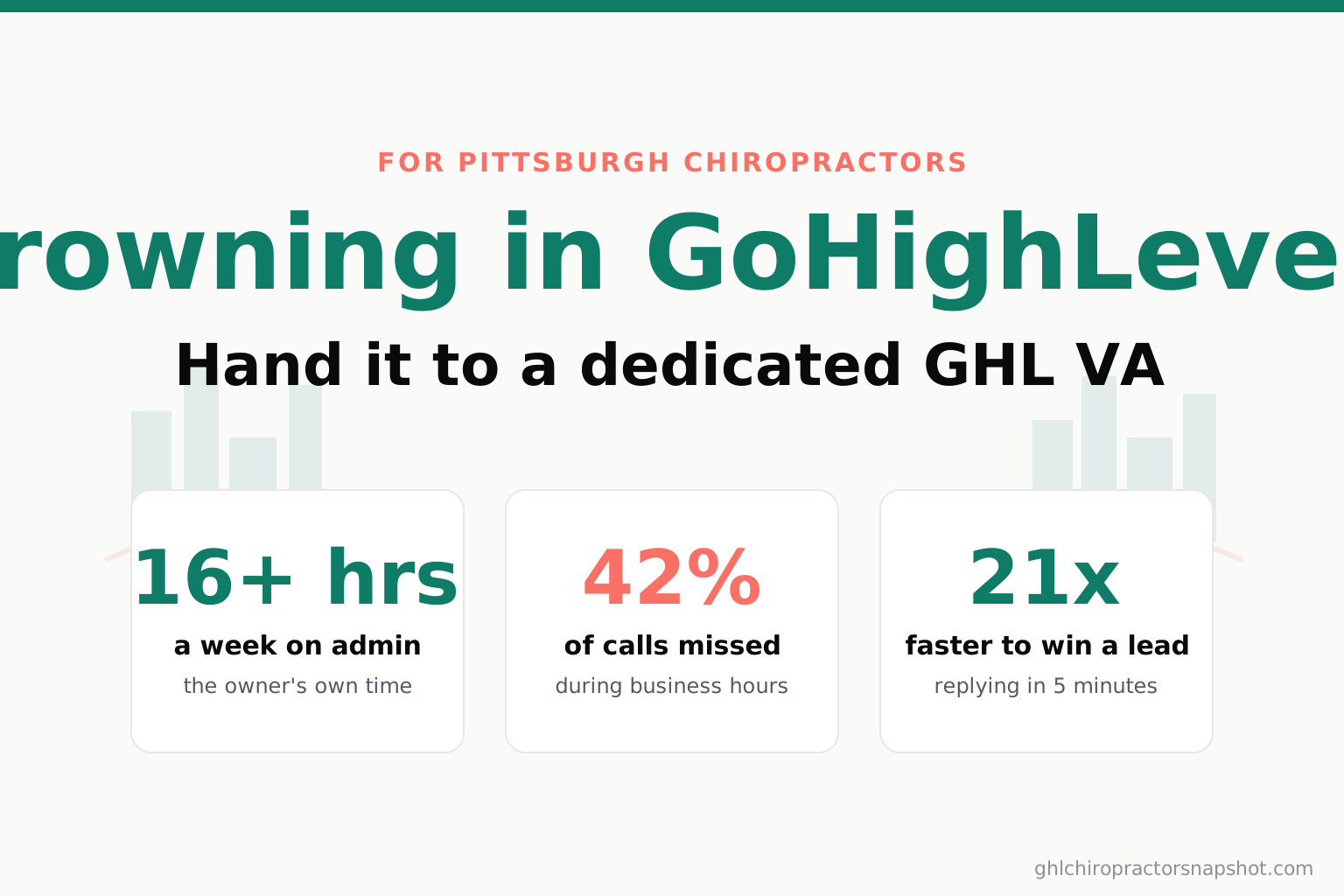
Should a Pittsburgh chiropractor run GoHighLevel themselves, or hand it to a dedicated GHL virtual assistant? For almost every owner-operated clinic, the VA wins — because the platform isn’t the problem, the person stuck maintaining it is. GoHighLevel can run your entire new-patient pipeline, but only if someone actually builds and tends the workflows. When that someone is you, the automations you bought to save time quietly rot: the missed-call text-back never gets turned on, the recall list never gets worked, and you end up doing CRM admin at 9 PM instead of the work that grows the clinic. Small-business owners already spend about 36% of their working week — more than 16 hours — on administrative tasks (ACCA / AB Magazine survey of 250+ entrepreneurs, 2025). A trained GoHighLevel VA takes that back.
This is a plain-spoken guide for Pittsburgh clinic owners — and the agencies who manage marketing for them — who bought GoHighLevel and discovered the tool is only as good as the person running it. We’ll put real, sourced numbers on what a half-built GHL account leaks every month, show exactly where a busy solo owner loses patients, and lay out what a dedicated GHL VA does that a login and good intentions can’t. Every statistic below is dated and linked.
Table of contents
- The short answer: hire an operator, not another login
- The Pittsburgh chiropractor’s real 9 PM
- Where the hours actually go
- Five leaks a half-built GoHighLevel account springs
- The cost of leaving GHL on autopilot-that-isn’t
- What a dedicated GoHighLevel VA actually takes off your plate
- DIY GoHighLevel vs. a dedicated GHL VA
- Doing it right in Pittsburgh: HIPAA, TCPA, and local intent
- Frequently asked questions
The short answer: hire an operator, not another login
Most Pittsburgh chiropractors don’t have a GoHighLevel problem. They have an operator problem. GHL is genuinely powerful — it folds your calendar, phone, texts, email, funnels, reviews, and pipeline into one system, and the Chiropractor Snapshot can install that whole engine in a day. But powerful and self-running are not the same thing. Every workflow needs someone to build it, test it, connect the phone number, register for A2P/10DLC, watch the automations fire, and fix what breaks. When nobody owns that job, the account becomes an expensive contact list with a calendar bolted on.
The reflex is to “learn GHL.” So you watch the tutorials, you build half a workflow between patients, and three weeks later the missed-call text-back still isn’t live because you got pulled into a personal-injury case and never came back to it. That’s not a discipline failure — it’s a role failure. Building and running marketing automation is a full-time skill, and you already have a full-time job with your hands on patients.
A dedicated GoHighLevel VA flips the model. Instead of you being the platform’s part-time, exhausted administrator, a trained GHL operator owns the account: they build the intake and recall workflows, wire the AI receptionist and chat widget, keep the pipeline clean, and send you a daily report so you know exactly what moved. You stop being the bottleneck. The clinic gets the automation it’s already paying for.
The Pittsburgh chiropractor’s real 9 PM
Picture a single-location clinic in Pittsburgh — one of the roughly 341 chiropractors serving the metro (ChiropractorsUp, 2026) competing for the same Allegheny County patients. The owner adjusts patients all day. The front desk is slammed from 8 to 10 AM and again mid-afternoon — the exact windows when the phone rings most. Then everyone goes home.
The GoHighLevel work doesn’t. It waits for the owner at 9 PM: the new leads from today’s Facebook ad that nobody texted back, the reactivation list that’s been “on the to-do” for a month, the reviews that need requesting, the workflow that’s been erroring since the phone number changed. This is the quiet tax of DIY automation — the platform promises to save you time, but only after someone spends time making it work, and that someone is you, after hours, when you’re least sharp.
Where the hours actually go
The time cost is measurable, and it’s larger than owners think. Across a survey of more than 250 entrepreneurs, respondents spent an average of 36% of their working week on administrative tasks — invoicing, data entry, scheduling, the digital plumbing — inside a 45.5-hour week, which works out to more than 16 hours of admin (ACCA / AB Magazine, 2025). For a clinic owner, “admin” increasingly is the CRM: chasing leads, fixing workflows, updating pipelines, sending reminders by hand when the automation isn’t finished.
Every one of those 16 hours is an hour you’re not adjusting patients, not building referral relationships with personal-injury attorneys, and not resting. And here’s the cruel part: because the automation is only half-built, you’re doing the manual version of work GHL is supposed to do for free — texting leads by hand, phoning no-shows one at a time. You’re paying for the software and doing the labor.
Five leaks a half-built GoHighLevel account springs
When the platform runs on autopilot-that-isn’t, patients slip out through the gaps. Here are the five that cost the most, each with the data behind it.
1. The phone that rings out
Front desks are busiest exactly when call volume peaks. Across a study of ~7,000 calls at 22 practices in 18 states, medical offices missed 42% of inbound calls during business hours (Physician Growth Accelerator, via AnswerNet). If your GHL missed-call text-back workflow isn’t built and live, every one of those rings is a silent lost booking — most callers simply dial the next clinic. A working missed-call text-back turns that dead ring into a text conversation in seconds.
2. Leads that go cold before you look
Speed-to-lead is the whole game, and it’s the first thing a busy owner loses. Contacting a web lead within 5 minutes rather than 30 makes you 21× more likely to qualify it (MIT / Oldroyd, Lead Response Management). Yet the average business takes 42 hours to respond, and 23% never respond at all (Harvard Business Review, 2011). A GHL account with no automated first-touch means your new-patient leads sit until you check your phone between adjustments — long after they’ve booked elsewhere.
3. No-shows nobody chases
Outpatient no-show rates run 20–30%, and each empty slot costs roughly $200 (peer-reviewed, NCBI/PMC). Reminder sequences and win-back messages are exactly what GHL is built to automate — but only if someone builds the workflow and keeps it healthy. Half-built, it sends a single reminder and gives up; unbuilt, your front desk is calling no-shows by hand, if at all. A proper no-show recovery system reminds, confirms, and re-books automatically.
4. The recall list that never gets worked
Every clinic has a spreadsheet of patients who dropped off their care plan — the single biggest pool of easy revenue you own. In a DIY account, reactivation campaigns live permanently on the “someday” list because building a multi-step, HIPAA-aware win-back sequence takes focused hours you don’t have. That’s compounding lost revenue, given what a returning patient is worth over their lifetime value.
5. Reviews you never ask for
Reputation drives local choice, and in a market with hundreds of chiropractors, the review count in your Map Pack listing is a tiebreaker. A GHL review-harvesting workflow can text a request the moment a visit is marked complete — but if it’s not switched on, you’re relying on memory and goodwill. Most happy patients never leave a review unless asked at the right moment, automatically.
The cost of leaving GHL on autopilot-that-isn’t
Add the leaks up and the math gets uncomfortable fast. You don’t need every number to be precise to see the shape of it: a clinic missing four in ten calls, letting web leads sit for hours, and never working its recall list is losing multiple new and returning patients every week. At even a conservative new-patient value, that’s thousands of dollars a month walking out a door you’re paying GoHighLevel to keep shut. For the full breakdown of what a patient is worth and what a lost one costs, see our guide to chiropractic patient acquisition cost.
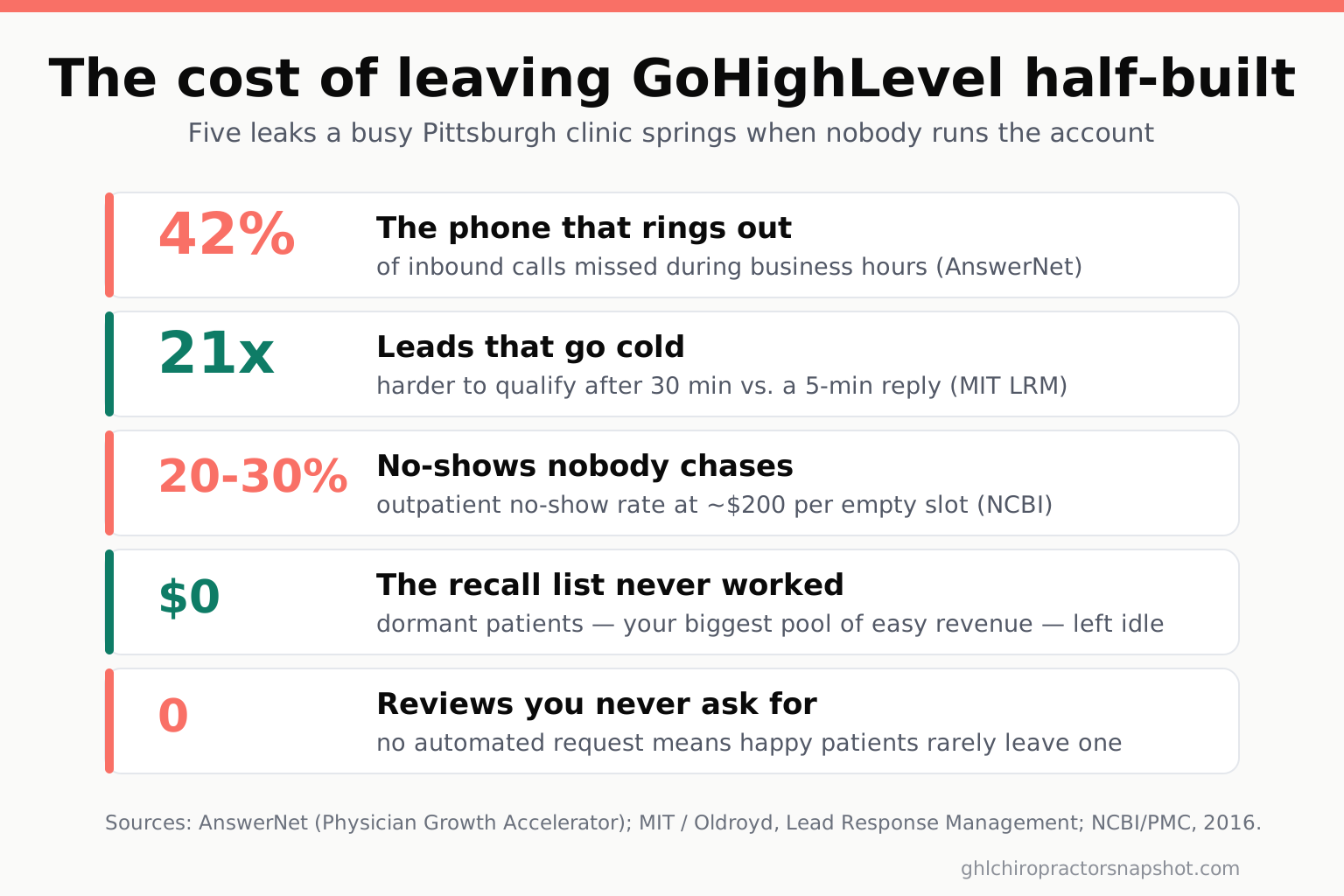
The through-line: none of these leaks are GoHighLevel’s fault, and none are fixed by “trying harder to learn GHL.” They’re fixed by putting a trained operator on the account full-time so the workflows are built once, correctly, and then watched.
What a dedicated GoHighLevel VA actually takes off your plate
A dedicated GoHighLevel VA isn’t a receptionist and isn’t a course you have to finish. It’s a chiropractic-niche GHL specialist who owns your account and runs the systems you bought it for.
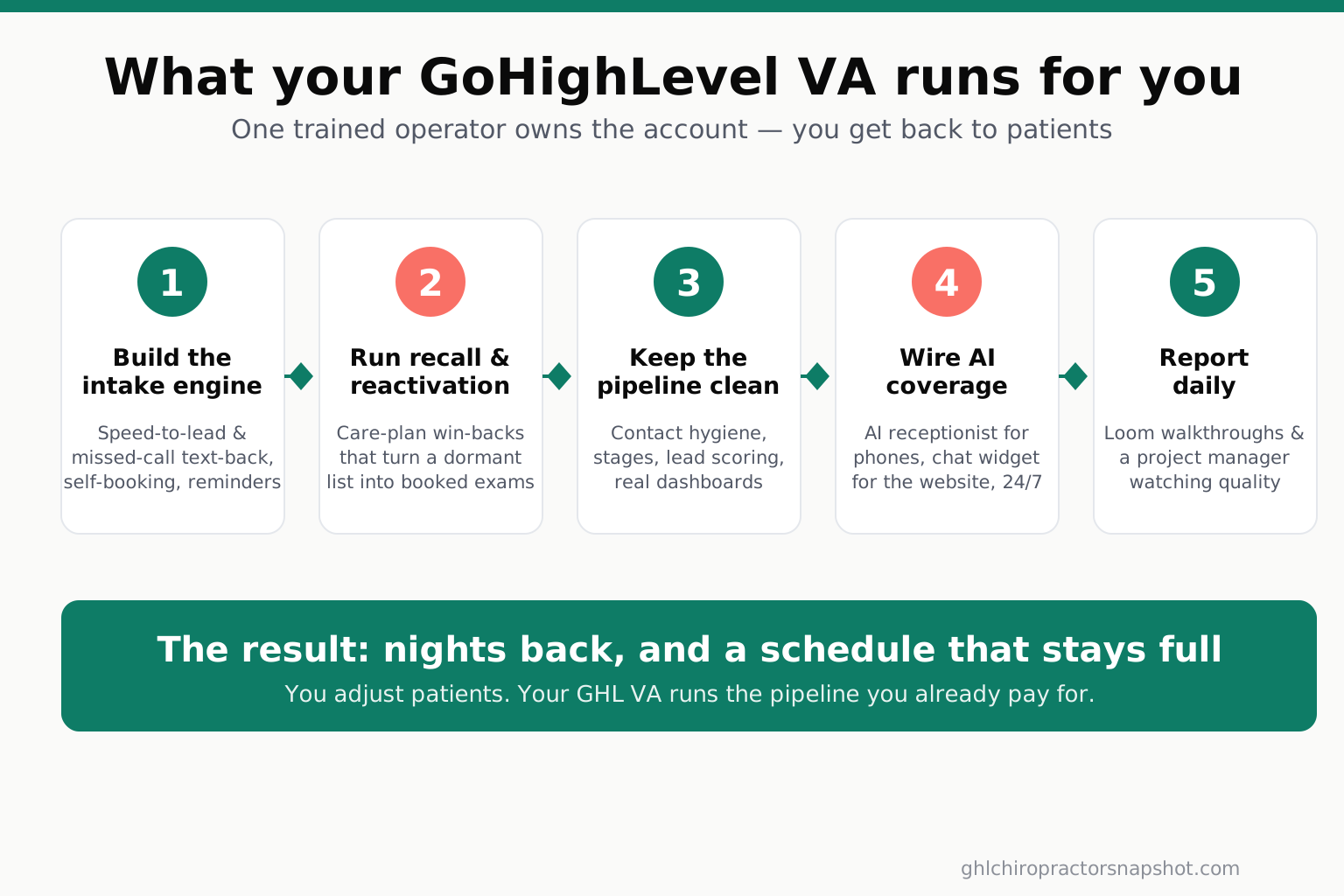
Concretely, they:
- Build and switch on the intake engine — speed-to-lead text-back, missed-call text-back, online self-booking, and appointment reminders, so no lead or call goes cold.
- Run recall and reactivation — the multi-step, care-plan-aware win-back campaigns that turn your dormant list into booked exams.
- Keep the pipeline clean — contact hygiene, custom fields, pipeline stages, and lead scoring, with dashboards that actually reflect reality.
- Wire and monitor AI coverage — an AI receptionist for the phones and an AI chat widget for the website, giving you 24/7 answers without you touching a setting.
- Handle the unglamorous plumbing — A2P/10DLC registration and compliance, calendar and telephony config, and the broken-workflow fixes that otherwise land on your 9 PM to-do list.
- Report daily — a project manager and Loom walkthroughs so you always know what shipped, without a “what’s the status?” email.
Our VAs have worked with 244+ chiropractic clinics and GHL agencies, so there’s no ramp cost and no learning curve on your dime — they already know the new-patient automations, recall cadences, and workflow structures that work for this niche. And if you’d rather start from a finished system, the Chiropractor Snapshot installs the entire intake-and-recall engine in a day, and your VA runs it from there.
DIY GoHighLevel vs. a dedicated GHL VA
Here’s the honest side-by-side for a Pittsburgh owner-operator deciding whether to keep running the platform themselves.
Running GHL yourself vs. a dedicated GoHighLevel VA (2026)
| Plan | You run GoHighLevel | Dedicated GoHighLevel VA recommended |
|---|---|---|
| Price | 'Free' — paid in your hours | from $747/mo |
| Feature 1 | 16+ hrs/week of admin already on your plate | Trained GHL operator, zero ramp cost |
| Feature 2 | Workflows half-built between patients | Intake, recall & no-show workflows fully built |
| Feature 3 | Leads and calls answered when you get to them | Speed-to-lead in seconds, not hours |
| Feature 4 | Recall list stuck on 'someday' | Automation covers nights & weekends |
| Feature 5 | You are the single point of failure | Daily reports + a project manager on quality |
| Feature 6 | No one watching workflows when they break | Cancel anytime, no long contract |
| See where the hours go | Hire a GoHighLevel VA |
A dedicated GHL VA starts at $747/month for four focused hours a day, Monday to Friday (Hire a VA plans) — a fraction of a payroll hire. For comparison, even a single in-house receptionist runs about $37,230 a year in base wage at the national median (U.S. Bureau of Labor Statistics, May 2024), before the roughly 30% employer benefits-and-tax load on top of every hire (BLS Employer Costs for Employee Compensation, 2025) — and if they leave, replacing them costs 50–200% of salary (Gallup). The VA is the leaner line item, and unlike a login, it comes with a person who actually does the work.
Doing it right in Pittsburgh: HIPAA, TCPA, and local intent
Automating patient messaging in Pennsylvania means doing it compliantly. A good GHL VA builds the system to support your obligations, not bypass them:
- HIPAA-aware templates. No protected health information in plain SMS — messages reference appointments and next steps, never diagnoses or clinical detail.
- TCPA-conscious sending. Every automated text honors opt-in and a working STOP, with sending windows that respect quiet hours. Your clinic stays responsible for operating within HIPAA and TCPA; the VA builds toward that standard by default.
- Local intent, captured. Pittsburgh patients search on their phones and expect a fast reply. Speed-to-lead text-back, self-booking, and 24/7 AI chat turn Allegheny County search traffic into booked exams instead of missed calls — the difference between showing up in the Map Pack and getting chosen from it.
The goal isn’t more software. It’s an owner who’s back to adjusting patients, with a specialist making sure the pipeline you already pay for is actually running.
Frequently asked questions
Pittsburgh chiropractors: DIY GoHighLevel vs. a GHL VA
I already pay for GoHighLevel — why do I need a VA too?
Because GoHighLevel is a platform, not an employee. The subscription gives you the tools; it doesn't build the workflows, register your A2P/10DLC, answer leads, or fix automations when they break. A dedicated GHL VA is the person who does all of that, so the software you already pay for actually earns its keep instead of sitting half-built.
Can't I just learn GoHighLevel myself?
You can, and many owners try. The problem isn't intelligence — it's time and focus. Building and maintaining marketing automation is a full-time skill, and you already have a full-time job with your hands on patients. Owners spend 16+ hours a week on admin as it is (ACCA, 2025). A VA already knows the platform, so the workflows get built in days, not the months a between-patients DIY takes.
How much does a GoHighLevel VA cost?
Plans start at $747/month for four focused hours a day, Monday to Friday, on our Hire a VA plans, with full-time options above that. For context, a single in-house receptionist runs about $37,230/year in base wage at the national median (BLS, 2024) plus roughly 30% in benefits and taxes (BLS ECEC, 2025). The VA is far cheaper and comes trained.
What exactly will the VA do for my clinic?
They build and run your GoHighLevel systems: missed-call text-back and speed-to-lead follow-up, online self-booking, appointment reminders and no-show recovery, patient recall and reactivation, review harvesting, and CRM/pipeline hygiene with reporting. They'll also configure and monitor an AI receptionist and chat widget for 24/7 coverage.
Is automated patient messaging HIPAA- and TCPA-compliant?
It's built to be. Templates are HIPAA-aware — no PHI in plain SMS — and every automated message is TCPA-conscious, honoring opt-in and a working STOP. Your clinic remains responsible for operating within HIPAA, Pennsylvania, and TCPA rules; the VA builds the system to support that, not to bypass it.
How fast can a VA take over my account?
After checkout we hand-pick and match a VA to your clinic and you're typically live within about 5–7 business days, with a project manager added to your Slack (or ClickUp/Asana/Trello) to monitor quality. If you'd rather start from a prebuilt system, the Chiropractor Snapshot installs the full intake-and-recall engine in a day and the VA runs it from there.
About the author
Rey Alcantara is a GHL Automation Strategist who builds the new-patient intake and recall systems that ship inside the Chiropractor Snapshot. After a decade running marketing-ops for multi-location wellness brands, he maps the messy reality of a busy front desk into clean GoHighLevel workflows, and writes about speed-to-lead, no-show recovery, and the unglamorous plumbing that keeps a chiropractic schedule full. He is an automation specialist, not a licensed chiropractor, and nothing here is medical advice.
Related posts
- Why San Diego Chiropractors Are Hiring a GoHighLevel VA Instead of Another Front-Desk Staffer
- Missed-Call Text-Back for Chiropractors: Turn Every Rung Phone Into a Booking
- How to Reduce No-Shows at Your Chiropractic Clinic
- The GoHighLevel AI Employee for Chiropractors
- Chiropractic Patient Reactivation Campaigns That Actually Re-Book